 comparison
Math Tutoring vs Khan Academy: Which Actually Works
Last Updated: November 4, 2026
Quick Summary
Math tutoring works better than Khan Academy when a student has real skill gaps, low confidence, or a test deadline, because a tutor diagnoses why errors happen. Khan Academy is a strong free option for motivated students who stay on task and need self-paced practice with instant feedback.
- Khan Academy offers free video lessons, worked examples, and adaptive practice from elementary math through calculus.
- Run a two-week trial with a baseline diagnostic and a checkpoint before deciding self-study is working.
- A rising practice streak inside a platform is not the same as transfer to unseen problems.
- With a test date inside eight weeks, favor instruction with weekly progress checks over open-ended review.
- Pair weekly tutoring sessions with structured independent practice to make paid sessions more cost-effective.
Table of Contents
- What the Evidence Says About Math Tutoring vs Khan Academy
- Khan Academy Math Effectiveness: Where Self-Study Delivers
- Benefits of One-on-One Math Tutoring for Struggling Students
- Khan Academy vs Tutor: Matching the Method to the Student
- How to Improve Math Skills: Combining Tutoring With Independent Practice
- Book a Free Consultation to Build Your Student's Math Plan
- Frequently Asked Questions
What the Evidence Says About Math Tutoring vs Khan Academy
The answer to math tutoring vs Khan Academy effectiveness depends on the student. Khan Academy is a strong, free resource for self-paced practice and worked examples.
Most families frame this as a binary choice. It isn't. The better question is which method fits the specific student in front of you, and whether combining them gets you further than either alone.
Below, we'll show you exactly how to match the method to the learner, including a decision table you can use today.
Khan Academy Math Effectiveness: Where Self-Study Delivers
Khan Academy works best for motivated students who need practice volume and clear explanations. The platform offers video lessons, worked examples, step-by-step explanations, and practice exercises with immediate feedback.
The Khan Academy math course library covers elementary mathematics through calculus, so a student can revisit foundational skills without waiting on a class schedule. Adaptive practice also adjusts difficulty based on answers, which helps build procedural fluency over time.
Where it delivers:
- Self-paced learning for students who stay on task
- Unlimited practice exercises with instant right/wrong feedback
- Video lessons that explain a concept the student missed in class
- Zero cost, which makes it a low-risk first step before paying for instruction
The catch is that none of this adapts to why a student got a problem wrong.
The Limits of Independent Online Learning
Independent study breaks down when the student can't diagnose their own errors. A wrong answer on a worksheet tells you the answer was wrong.
A common mistake is treating more screen time as more learning. Students who struggle with self-direction tend to click through videos without absorbing them, then repeat the same mistakes on the next practice set. Motivation and consistency are the real bottlenecks, not access to content.
Human feedback closes that loop. If you want a deeper look at how targeted instruction repairs foundational gaps, see our guide on how tutoring addresses foundational math gaps.
A Measurable Way to Test Whether Self-Study Is Working
Rather than guessing, run a two-week trial with a baseline and a checkpoint. This is the decision framework most comparisons skip, and it turns a vague preference into evidence.
- Baseline: Give the student a short diagnostic or a released state assessment sample covering the target skill. Record the score and the specific item types missed.
- Two weeks of self-study: Assign a fixed number of practice sets per week on the platform, not open-ended screen time.
- Checkpoint: Re-administer a parallel set of items on the same skill.
- Decision rule: If accuracy on the targeted skill rises and the student can explain the steps aloud, self-study is working. If accuracy is flat or the student still can't articulate why a step works, the bottleneck is diagnosis, not practice volume.
Watch out: a rising practice streak inside a platform is not the same as transfer. Confirm gains with items the student has not seen before, or the improvement may reflect memorized answer patterns rather than understanding.
This trial also tells you what to bring to a tutor if you hire one.
Benefits of One-on-One Math Tutoring for Struggling Students
One-on-one math tutoring centers on diagnosis and adaptation.
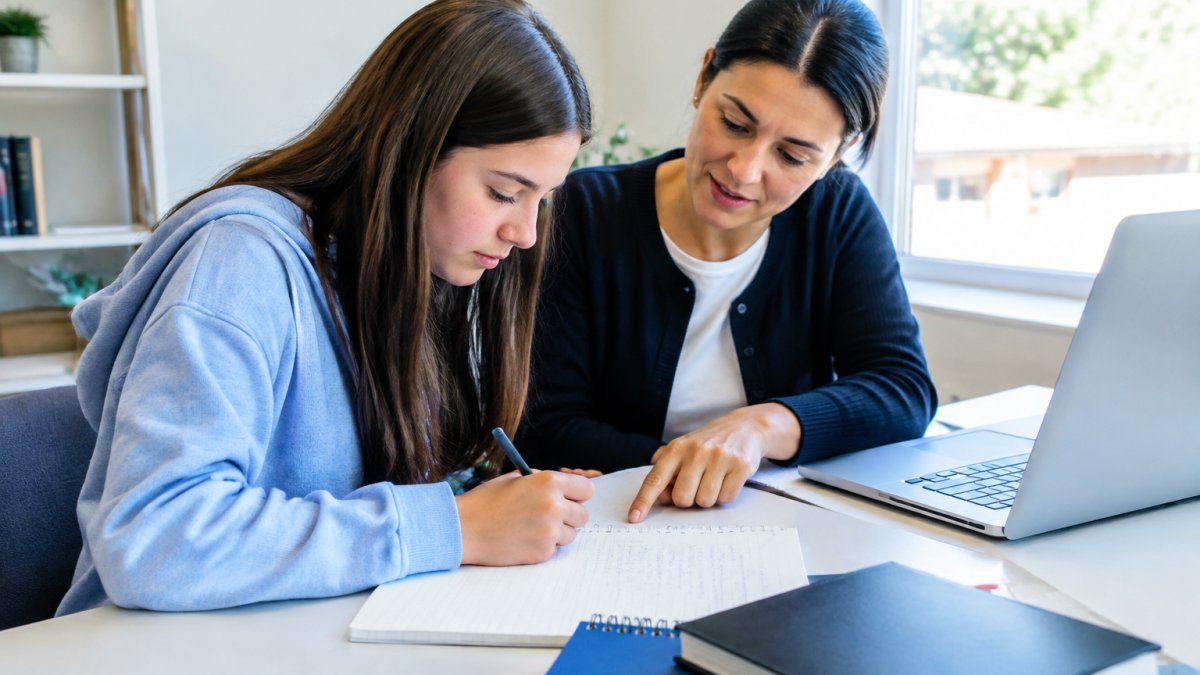
Personalized instruction also addresses math anxiety. Students who shut down in class often relax when they can ask the same question three times without an audience. Confidence builds from small wins, and a dedicated tutor can sequence those wins deliberately.
At Discover 360 Tutoring, students start with a targeted diagnostic assessment, and the learning plan is built around what it reveals. For families weighing this route, our breakdown of the real benefits of one-on-one math tutoring goes deeper.
Khan Academy vs Tutor: Matching the Method to the Student
The Khan Academy vs tutor decision comes down to three variables: grade level, current proficiency, and how much structure the student needs. A self-motivated honors student reviewing for a test and a sophomore who has failed two math courses need different tools.
Apply Now — Free Consultation →
| Student profile | Better first choice | Why |
|---|---|---|
| Motivated, on grade level, wants extra practice | Khan Academy | Free, self-paced, strong practice volume |
| Behind by one or more grade levels | One-on-one tutoring | Needs diagnosis of root skill gaps |
| Math anxiety, shuts down in class | One-on-one tutoring | Private setting, human feedback, confidence building |
| Test prep with a fixed deadline | One-on-one tutoring | Targeted review and progress monitoring |
| Advanced student racing ahead | Either, often combined | Self-study for volume, tutor for depth |
Outcomes by Grade Level and Math Proficiency
Proficiency changes the calculus more than age does. Students with solid conceptual understanding gain the most from independent practice because they can self-correct. Students with weak procedural fluency need someone to watch the work and intervene.
Grade level matters for a different reason: stakes rise. Elementary mathematics gaps are easier to close early. By high school, a missing algebra foundation undermines chemistry, physics, and SAT/ACT math scores at once.
Segment the decision this way:
- Elementary students: foundational gaps are usually narrow and concrete. A short block of tutoring to repair number sense or fractions often resolves what looks like a broad struggle.
- Middle schoolers: pre-algebra is where hidden gaps surface. Self-study works if the student can name what they don't understand; tutoring works when they can't.
- High schoolers: course grades and test dates create deadlines. Targeted tutoring with progress checks fits better than open-ended review.
- Adult learners returning to math: self-study is viable for refreshing familiar material, but placement testing or a diagnostic is worth doing first to avoid practicing at the wrong level.
- Advanced learners: independent study handles acceleration; a tutor adds depth through proof, competition math, or enrichment that a standard course library may not sequence.
If confidence is the missing piece for a high schooler, our guide on building math confidence in high school covers the specific steps.
Tutor Quality and Instructional Fit
A tutor is not a generic upgrade over a platform. Outcomes depend on whether the tutor can diagnose accurately, explain more than one way, and adjust pacing. Before committing, ask how the provider handles these points:
- Diagnosis: Is there a baseline assessment, and will you see the results?
- Continuity: Will the student work with the same tutor each session, or a rotating pool?
- Explanation style: Can the tutor re-teach a concept a different way when the first explanation doesn't land?
- Progress reporting: What evidence will you receive that the student is improving, and how often?
- Subject depth: Does the tutor know the specific course and the standards it follows, including state assessment formats?
Watch out: a tutor who only assigns practice problems is duplicating what a free platform already does. The value of instruction is diagnosis and adaptation, so confirm that sessions include both.
A Decision Checklist You Can Apply Today
Use these criteria to choose or combine the two approaches:
- Baseline skill: Take a diagnostic. If the student is at or above grade level, start with self-study.
- Error pattern: If mistakes cluster around one prerequisite skill, targeted tutoring is the faster route.
- Time available: With a test date inside eight weeks, favor instruction with weekly progress checks.
- Self-direction: If the student needs external structure to start work, a platform alone is unlikely to hold.
- Budget: Self-study is free; tutoring is a paid service, and pricing depends on format, frequency, and plan, so check Discover 360 Tutoring's website or request a quote before committing.
- Progress check: Set a review date, four to six weeks is a common interval, and re-test the same skill to confirm the choice is working.
Most families find the answer is not either-or. A student can use free practice for volume and reserve paid sessions for diagnosis, correction, and accountability.
How to Improve Math Skills: Combining Tutoring With Independent Practice
The most effective way to improve math skills is to pair weekly tutoring sessions with structured independent practice between them. Tutoring can address gaps and build conceptual understanding. Independent practice supports retention and speed through repetition.
A workable weekly rhythm:
- Tutor session: work through the diagnosed gap with step-by-step explanations and immediate feedback
- Same-day review: redo two or three missed problems alone while the method is fresh
- Mid-week practice: a short set of worksheets or platform exercises on the same skill
- Pre-session check: note which problems felt hard so the tutor can start there
This combination also makes tutoring more cost-effective. Sessions go toward diagnosis and correction rather than routine practice the student can do alone. Since pricing depends on the provider, format, and frequency, check directly with Discover 360 Tutoring's website or a quote for current rates before you commit.
Book a Free Consultation to Build Your Student's Math Plan
Choosing between self-study and instruction is a decision you can make with evidence rather than guesswork.
Discover 360 Tutoring builds custom learning plans from a targeted diagnostic assessment, pairs each student with a dedicated tutor, and provides regular progress updates for parents. Sessions are available online or in person with flexible scheduling.
Get started with Discover 360 Tutoring and book a free consultation to map out your student's math plan.
Frequently Asked Questions
Is Khan Academy actually good for learning math?
Khan Academy is a solid free resource for practice exercises, video lessons, and worked examples, and it supports self-paced learning well. Its weakness is accountability: no one notices when a student skips a step or quietly avoids a skill gap. Students who are already self-directed and consistent tend to get real value from it. Students who shut down when confused usually need human feedback and one-on-one instruction to keep moving.
Can Khan Academy replace a math tutor?
For some students, partly. Khan Academy covers content and gives immediate feedback on practice problems, but it cannot diagnose why an answer went wrong or adjust the instructional approach on the spot. A tutor watches the work, catches the misconception behind the error, and rebuilds the underlying skill. If your student has years of foundational gaps or math anxiety, self-study alone rarely closes them.
How should students use Khan Academy alongside a math tutor?
Use the tutor for diagnosis and instruction, and Khan Academy for repetition between sessions. A tutor identifies the specific skill gaps, teaches the concept with step-by-step explanations, then assigns targeted practice exercises for the days in between. Progress monitoring happens in the next session. This split keeps independent study purposeful instead of turning into unfocused screen time.
How long does it take to see improvement in math with tutoring?
It depends on how far back the gaps go, but measurable change usually shows up faster with structured one-on-one instruction than with self-study alone. Discover 360 Tutoring aims for grade improvement within eight weeks, built on a diagnostic assessment and a custom learning plan. Students rebuilding years of foundational gaps should expect steady progress rather than a single jump.